Tallahassee Democrat, May 21, 2007
Gun control: The juvenile and pointless debate continues
By Adam Weinstein
My father is a gun nut. He collects them, new ones and old ones, and he derives unfathomable glee from shooting, cleaning and studying them. Thanks to him, I can field-strip an M-16, shoot a Winchester '86 and tell the difference between a matchlock and a flintlock.
But when I turned 21 and applied for a Florida carry permit like Dad's, he didn't do cartwheels or take me window shopping for a double-action hand cannon. His only acknowledgment was to take me out to the side of a road and pull me down beside the remnants of a recently flattened possum.
"Dead," Dad intoned, "is dead. No replays, no extra lives, no do-overs. Just like this road kill."
This was not mere eccentricity on my pop's part. He wanted me to acknowledge a simple truth: Guns are lethal instruments, and they are not for everybody. Not long after, I decided that, except for an occasional weekend trip to the range, guns were not for me.
All of which makes it hard for me to understand why, even after a heartbreak like the one at Virginia Tech last month, the debate over gun control remains as juvenile and pointless as ever.
On one hand, you have the National Rifle Association claiming to speak for all gun owners. Apparently, though, its constituency doesn't include my family of gun owners, since we believe in more rigorous background checks, gun traces, and limits on the ownership of watermelon-exploding .50-caliber Barrett sniper's rifles.
On the other hand, you have one-note liberal groups like the Brady Campaign and the American Civil Liberties Union, who consider gun ownership too insidious to deserve the same protections afforded free speech or due process.
Lost in the middle, I fear, are gun owners like my father - and other middle-of-the-road citizens - who appreciate the right of self-defense, but want it to come with greater responsibilities. In the marketplace of ideas, gun-policy moderates don't even rate a kiosk.
Why is it so hard to reach reasonable compromises on gun ownership?
One scholar has an answer. Gary Kleck, a criminology professor at FSU, spent the last three decades researching the relationship between guns and violence in America. But his latest research focuses on the gun debate itself.
Its conclusion: The dialogue on gun rights has been hijacked and slickly packaged by self-styled culture warriors. Rather than weighing evidence, these factions encourage citizens like you to take cues from your membership in an in-group.
"People support gun control," Kleck says, "because they're in the cultural groups that are hostile to gun owners." The data suggest that those groups include Northerners, Jews and Catholics, women and the upper middle classes. Among their members, the gun debate isn't about assault weapons, mental-health checks or Teflon bullets: It's about the senselessness of gun ownership in their worldview, period.
Women, in particular, are likely to see "alleged defensive gun use as fraudulent," Kleck says, where men are more likely to approach guns as "useful tools." Likewise, the data show Southerners, Protestants and the economically depressed are probably pro-guns - more due to tradition than reason.
Kleck maintains that the culture clash in gun policy is especially obvious in his workplace, the ivory tower. Academic researchers fit the cultural mold of anti-gun Americans. Consequently, he says, "Many will say, 'We don't care how many surveys have been done (that are) inherently in favor of self-defense as a justification.' Facts don't affect your cultural animosities."
That's a shame, because the facts in his earlier studies provide food for thought. Guns, he concluded, are "instruments that have the same impact on aggression and defense. In both cases," he says, "they empower the possessor." In other words, guns make crime easier - but they also make self-defense easier.
Could it be possible that pro-gunners and anti-gunners are both right? Absolutely. There's plenty of fertile ground for compromise.
"Most gun owners favor moderate controls," Kleck believes. Likewise, "There's a certain amount of sympathy for gun owners among rank-and-file ACLU members," he argues. And he should know: He's a member of the ACLU and Amnesty International, both historically anti-gun groups.
The problem is, there are big incentives to the game of culturally divisive politics. In this atmosphere, most Americans won't take time to sift through the complex statistics collected on crime and guns. They'll just take marching orders from interest groups led by folks "like them" - groups that will steer them away from thoughtful reflection and toward the slopes of righteousness.
So how do we rise above the rhetoric for a progressive but constitutionally fair gun-policy compromise? It all depends on our efforts to promote "an educational system that produces a truly engaged citizenry," Kleck suggests. But it won't be easy. As he puts it: "I'm not optimistic about people putting aside likes and dislikes that they've held for decades."
Adam Weinstein, a recent copy editor at the Tallahassee Democrat, returns to Columbia University this summer to work on a graduate degree. Contact him at damnthetorpedoes@hotmail.com.
Sunday, July 01, 2007

Freedom doesn't march
Tallahassee Democrat, Nov.19, 2006, page E5
By Adam Weinstein
More than a week has passed since the big shake-up on Capitol Hill and the news that Donald Rumsfeld is out as secretary of defense. The departure of "the Don" is getting rave reviews all around, especially here in the mostly blue city of Tallahassee.
But we still have a problem, folks. A big one.
Sure, it's a relief to most of us that Rumsfeld will be writing memoirs now instead of operations orders. But we should still be concerned that the ex-secretary's neoconservative vision - the one that stuck us with Iraq and fouled up our mission there - still lingers in the White House air.
The heart of that vision is a deep-seated belief that our home, the good ol' U.S. of A., has the gumption and the high duty to create democratic states in our image anyplace and anytime we feel like it.
It sounds like a great idea. And our president, the Great Decider, uses a snazzy catch-phrase to sum up our responsibility to export democracy at the tip of a spear.
"Freedom," he likes to say, "is on the march."
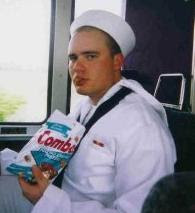
I spent a couple of years in the Navy. I marched a lot.
And do you know what I learned?
Freedom doesn't march. It breaks step. And if it ever keeps cadence at all, it does so to a decidedly different beat.
That's a fact that conservatives, of all people, should understand. Back in the days before they ran Capitol Hill and the White House, conservatives used to argue that an overreaching, oversized government was far more dangerous than the evils it sought to cure. Conservatives used to trash communists for precisely that: using government power, and force, to engineer a new society, to change human nature into something it wasn't.
Soviet communists used to talk all the time about "exporting the revolution abroad." But their revolution never sat pretty with other countries. Not in Eastern Europe, not in the Baltic, not in Central and South Asia. Nope, the Russians learned the hard way: You don't get too far in this world by trying to impose your version of law and order on others. And you surely don't get much mileage out of calling that freedom or democracy.
Conservatives still understand that, domestically. Red-state residents are always wary of government efforts to take their guns or money, to impose limits on their freedom of speech or movement. The image of "jack-booted FBI thugs" is still enough to make most rural Americans rightly shudder.
So, if Middle America isn't ready to greet an occupying army with roses and cheers, how silly is it for us to expect such a reaction from citizens of a foreign country we just bombed into the Middle Ages?
Oh, sure, sometimes an occupation works, as in Germany and Japan after World War II. Sometimes it just has to work, as it does in Afghanistan, the terrorists' former playground. But we have a lot to offer the average Afghan. Like indoor plumbing. Paved roads. Formal education. The promise that people won't get stoned for listening to music or flying kites. Besides that, we had the support of 5 billion souls around the world who were united in horror after 9/11 and agreed that its perpetrators had to be rooted out.
Contrast this with Iraq, where a majority of the world's - and now U.S. - citizens don't see a big threat. Where there already was an infrastructure, and where we struggle to restore services that our bombs destroyed and that insurgents now manage to keep broken. Where we impose curfews, mass arrests and house-to-house searches. Where our troops accomplish Herculean tasks from day to day, yet see their accomplishments eroded from week to week.
That's what happens when you try to make freedom march.
So you'll forgive me for being guarded in my optimism. My hope is that we just dumped the Toby Keith approach to government ("It's going to be hell/ When you hear Mother Freedom/ Start ringing her bell") for the Kenny Rogers approach ("Know when to hold 'em/ Know when to fold 'em"). Maybe the days of imposing Texas justice on the Mideast really are waning, and we'll be a little more selective about where our nation draws its lines in the sand.
Maybe. But only time will tell.
Adam Weinstein, a copy editor at the Tallahassee Democrat, is a graduate student in international affairs at Florida State University.
Friday, June 08, 2007
NY Times: Pace is out at JCS.
So the word is out: Marine Gen. Peter Pace is done as chairman of the Joint Chiefs. Which renders obsolete, before it got picked up for publication, this news story that I wrote on Wednesday:
"Missteps by general raise concerns that, in the military, free speech is a right for the few, the proud, the high-ranking"
Few convicted felons could count on the admiration of as many luminaries as Scooter Libby could. Nearly 200 politicians, administration officials and personal friends wrote letters supporting Libby before his Tuesday sentencing for obstruction of justice. But one supporter didn't seem to jive with the others: his name is Peter Pace, and he just happens to be a Marine general, the chairman of the Joint Chiefs of Staff and the nation's highest-ranking military officer.
According to the letter, Gen. Pace wrote it "at the request of Mr. Scooter Libby." Pace and Libby sometimes crossed paths in their jobs, and Pace's letter was not a glowing political endorsement, especially when compared with the favorable missives Libby received from former colleagues like Donald Rumsfeld, Paul Wolfowitz and Henry Kissinger. "He served the United States Government extremely well," Pace concluded simply.
But Nancy Sherman, a Georgetown philosophy professor and military ethicist, said that even if it isn't a breach of professional ethics, it seems imprudent for a country's senior service member to write a character reference for a presidential partisan convicted of engaging in a political cover-up. "He's not just your ordinary officer," said Sherman, who used to chair the ethics department at Pace's alma mater, the U.S. Naval Academy."You're talking about someone who is talking in his professional role, and the role is one where he's supposed to be nonpartisan."
A public affairs officer for the Joint Chiefs of Staff declined to comment on Pace's memo Wednesday, saying only that the letter spoke for itself.
This isn't the first time this spring that the chairman's words have come under public scrutiny. In March, Gen. Pace told the Chicago Tribune that homosexuality was immoral, and he didn't believe "the United States is well served by a policy that says it is OK to be immoral in any way." His remarks were criticized in the mainstream media; President Bush publicly distanced himself from them. But the Pentagon and the White House gave no indication that Pace's comments - or his recent letter supporting Libby - warranted disciplining.
Some experts say the latitude given to Pace highlights a hypocritical attitude in the military: the higher your rank or the more conservative your speech, the freer you are to express yourself. "It's very arbitrary," said Washington-based attorney and Army reservist Mike Lebowitz. "Absolutely, there's a double standard when it comes to free speech in the military." Lebowitz represents Adam Kokesh, the former Marine and Iraq veteran who had his discharge downgraded from "honorable" to "general" for wearing a uniform at an anti-war rally.
"The military has been very progressive on some aspects," Lebowitz said, "but it also has a very conservative mentality." In this culture, the expression of political viewpoints is fine, as long as they don't challenge existing policies. War critics like Kokesh can be liable for their activities even after they leave active duty. But vocal conservatives, such as evangelical service members who proselytize for the faith, rarely face such punishments. "They get a slap on the wrist," Lebowitz said.
That proved true for Lt. Gen. William "Jerry" Boykin, a Special Forces veteran and outspoken Christian selected by Donald Rumsfeld to be deputy undersecretary of defense for intelligence. In 2003, according to the Los Angeles Times, Boykin went on a cross-country church speaking tour. In Oregon, while in uniform, he told churchgoers that the U.S. was hated "because we're a Christian nation," and America's enemies would "only be defeated if we comea gainst them in the name of Jesus." Boykin's statements caused a firestorm on Capitol Hill, and a Pentagon investigative report leaked to the Washington Post in 2004 found that his speeches had violated three internal guidelines.
Today, Boykin still holds the same post and his three general's stars.
Whether or not there's a political bias on free speech in the service, critical attitudes are getting easier to find. The"long war" in Iraq and Afghanistan is conditioning junior grunts to exercise greater independence in making decisions. It's also a struggle whose reality often falls short of the ideals that attracted many young men and women to the service. As a result, said Sherman, it's fair to wonder if returning veterans "won't be able to compartmentalize their experiences abroad, if they'll feel restricted from thinking outside the box" back home. "The more independence we extend to service persons in the field," she said,"the less reasonable it might be to bring them home and expect them to be silent." Sherman saw this as a positive development. "You want the soldier to ultimately be able to express his conscience,"Sherman said. "Otherwise, you have mindless soldiers."
Eugene Fidell, president of the National Institute of Military Justice, agreed. "It's quite important that active duty military personnel feel free to express themselves when someone is under the gun," he said. Fidell saw Pace's Libby letter as "a real dividend in terms of justice for GIs. It was a reflection of a greater willingness among service members to come forward and speak freely." At the same time, Fidell conceded that all speech is not treated equally in the ranks. "It only becomes a matter of concern or interest if it is hostile to the government," he said.
Lebowitz sees this as an unfair catch-22: It's up to the government and the military culture to decide what's hostile to the government, and by and large, that's anything critical of the status quo. He's gotten calls and letters from a variety of military personnel sympathetic to Kokesh, but he can't get many to support an anti-war comrade on the record. "The military is a very small world," said Lebowitz, "and word gets around, even between the branches. There's definitely a chilling effect."
He's not expecting a letter from the chairman of the Joint Chiefs on Kokesh's behalf anytime soon.
"Missteps by general raise concerns that, in the military, free speech is a right for the few, the proud, the high-ranking"
Few convicted felons could count on the admiration of as many luminaries as Scooter Libby could. Nearly 200 politicians, administration officials and personal friends wrote letters supporting Libby before his Tuesday sentencing for obstruction of justice. But one supporter didn't seem to jive with the others: his name is Peter Pace, and he just happens to be a Marine general, the chairman of the Joint Chiefs of Staff and the nation's highest-ranking military officer.
According to the letter, Gen. Pace wrote it "at the request of Mr. Scooter Libby." Pace and Libby sometimes crossed paths in their jobs, and Pace's letter was not a glowing political endorsement, especially when compared with the favorable missives Libby received from former colleagues like Donald Rumsfeld, Paul Wolfowitz and Henry Kissinger. "He served the United States Government extremely well," Pace concluded simply.
But Nancy Sherman, a Georgetown philosophy professor and military ethicist, said that even if it isn't a breach of professional ethics, it seems imprudent for a country's senior service member to write a character reference for a presidential partisan convicted of engaging in a political cover-up. "He's not just your ordinary officer," said Sherman, who used to chair the ethics department at Pace's alma mater, the U.S. Naval Academy."You're talking about someone who is talking in his professional role, and the role is one where he's supposed to be nonpartisan."
A public affairs officer for the Joint Chiefs of Staff declined to comment on Pace's memo Wednesday, saying only that the letter spoke for itself.
This isn't the first time this spring that the chairman's words have come under public scrutiny. In March, Gen. Pace told the Chicago Tribune that homosexuality was immoral, and he didn't believe "the United States is well served by a policy that says it is OK to be immoral in any way." His remarks were criticized in the mainstream media; President Bush publicly distanced himself from them. But the Pentagon and the White House gave no indication that Pace's comments - or his recent letter supporting Libby - warranted disciplining.
Some experts say the latitude given to Pace highlights a hypocritical attitude in the military: the higher your rank or the more conservative your speech, the freer you are to express yourself. "It's very arbitrary," said Washington-based attorney and Army reservist Mike Lebowitz. "Absolutely, there's a double standard when it comes to free speech in the military." Lebowitz represents Adam Kokesh, the former Marine and Iraq veteran who had his discharge downgraded from "honorable" to "general" for wearing a uniform at an anti-war rally.
"The military has been very progressive on some aspects," Lebowitz said, "but it also has a very conservative mentality." In this culture, the expression of political viewpoints is fine, as long as they don't challenge existing policies. War critics like Kokesh can be liable for their activities even after they leave active duty. But vocal conservatives, such as evangelical service members who proselytize for the faith, rarely face such punishments. "They get a slap on the wrist," Lebowitz said.
That proved true for Lt. Gen. William "Jerry" Boykin, a Special Forces veteran and outspoken Christian selected by Donald Rumsfeld to be deputy undersecretary of defense for intelligence. In 2003, according to the Los Angeles Times, Boykin went on a cross-country church speaking tour. In Oregon, while in uniform, he told churchgoers that the U.S. was hated "because we're a Christian nation," and America's enemies would "only be defeated if we comea gainst them in the name of Jesus." Boykin's statements caused a firestorm on Capitol Hill, and a Pentagon investigative report leaked to the Washington Post in 2004 found that his speeches had violated three internal guidelines.
Today, Boykin still holds the same post and his three general's stars.
Whether or not there's a political bias on free speech in the service, critical attitudes are getting easier to find. The"long war" in Iraq and Afghanistan is conditioning junior grunts to exercise greater independence in making decisions. It's also a struggle whose reality often falls short of the ideals that attracted many young men and women to the service. As a result, said Sherman, it's fair to wonder if returning veterans "won't be able to compartmentalize their experiences abroad, if they'll feel restricted from thinking outside the box" back home. "The more independence we extend to service persons in the field," she said,"the less reasonable it might be to bring them home and expect them to be silent." Sherman saw this as a positive development. "You want the soldier to ultimately be able to express his conscience,"Sherman said. "Otherwise, you have mindless soldiers."
Eugene Fidell, president of the National Institute of Military Justice, agreed. "It's quite important that active duty military personnel feel free to express themselves when someone is under the gun," he said. Fidell saw Pace's Libby letter as "a real dividend in terms of justice for GIs. It was a reflection of a greater willingness among service members to come forward and speak freely." At the same time, Fidell conceded that all speech is not treated equally in the ranks. "It only becomes a matter of concern or interest if it is hostile to the government," he said.
Lebowitz sees this as an unfair catch-22: It's up to the government and the military culture to decide what's hostile to the government, and by and large, that's anything critical of the status quo. He's gotten calls and letters from a variety of military personnel sympathetic to Kokesh, but he can't get many to support an anti-war comrade on the record. "The military is a very small world," said Lebowitz, "and word gets around, even between the branches. There's definitely a chilling effect."
He's not expecting a letter from the chairman of the Joint Chiefs on Kokesh's behalf anytime soon.
Tuesday, June 05, 2007
Comfort the comfortable.
An old adage in journalism says that your job should be "to comfort the afflicted and afflict the comfortable." Yet here's one Sun-Sentinel journalist's account of how the paper's new leadership set its repertorial priorities:
"snippets of reader interviews were shown ... informing us that predominantly white, overweight people want more stories about local restaurants, water restrictions, gas prices, anti-depressants, pets, vibrator sales and immigration. (Not the actual immigration issue, mind you, just clues to where they can shop and work to avoid immigrants themselves.) ... They want stuff that appeals to that selfishness, we’re told. ... Readers just don’t have time to get up off their lazy asses and research things themselves. At least not the readers we’re aiming for.
To put it bluntly, our job now is to comfort the comfortable and ignore the afflicted. Unless they’re bothering the comfortable. In that case, we need to tell the comfortable what they can do to avoid the afflicted."
Not unlike my experience in Tallahassee. Thank God muckrakers and industry watchdogs like Bob Norman are still around.
"snippets of reader interviews were shown ... informing us that predominantly white, overweight people want more stories about local restaurants, water restrictions, gas prices, anti-depressants, pets, vibrator sales and immigration. (Not the actual immigration issue, mind you, just clues to where they can shop and work to avoid immigrants themselves.) ... They want stuff that appeals to that selfishness, we’re told. ... Readers just don’t have time to get up off their lazy asses and research things themselves. At least not the readers we’re aiming for.
To put it bluntly, our job now is to comfort the comfortable and ignore the afflicted. Unless they’re bothering the comfortable. In that case, we need to tell the comfortable what they can do to avoid the afflicted."
Not unlike my experience in Tallahassee. Thank God muckrakers and industry watchdogs like Bob Norman are still around.
A letter to my friend at the crappy local newspaper.
Date: Tue, 05 Jun 2007 14:08:14 -0400
From: aw333@columbia.edu
To: ******@sun-sentinel.com
Subject: Good Lord. Maybe it's good that print news is dying.
Well, I suppose it was time for the obligatory annual "Hi ******, remember me?" email anyway. I was just talking with ^^^^^ and +++++, both of whom you may not remember... I'd caught up with them at last summer's Ely HS 10-year reunion. I went so you wouldn't have to, and believe me when I say it was a truly Christlike sacrifice to be there.
Anyway, we were all sitting around the other day, sopping up brews and inveighing against the dumbification of the Scum Sentinel. It's no big surprise to me, since I worked at the Tallahassee Democrat for the last two years and got to see Knight Ridder and then Gannett gut a newspaper-of-record just to try the whole "blogs and neighborhood drivel" angle. (We should compare notes sometime. Ask me about my time as the "Hungry Hungry Hipster," the paper's pop-culture blogger. Irony: Anyone who looks at me can immediately discern that I am never hungry and rarely hip.)
But after bashing Earl Maucker and a fair number of other Tribune peons for an hour or so, I said, "That's all well and good, but as long as they save a place for ******'s pithy movie reviews and stories, I'll keep my subscription."
So. Then. What's with all this AP wire stealing your space in "Showtime"? What's with the online video review of Shrek III? (We tried that at the Dem, too... there's nothing sadder than a bunch of talented writers looking uncomfortable and untalented as TV anchors. No offense to colleagues of yours, but I'd buy your newspaper, if it guaranteed *never* seeing video of Mike Mayo and Tom Jicha.) Tell me, my gifted 10th-grade crush, that you have a resume all set up and ready to fax, because this "community news" screed clearly doesn't know what to do with the few good folks they have.
But enough shop talk. Real reason for writing: I've got just a few months in town before returning to grad school in Manhattan and think it's high time for a reunion. How about it? Would anybody in the Sentinel building miss you if you slipped out for lunch? (More likely they'd just replace you with a panel of old ladies from Sunrise who'd rail on about the unnecessary growth of adult situations in big-studio comedies.) Go ahead, take a chance. I'll even introduce you to the missus.
Seriously, though. Hope all is well with you, and hope to hear from you soon.
- Adam
P.S. remember Tatiana? She says hello. She also says you should read Paulo Coelho's "The Alchemist", but I'm going to overrule her on that one.
From: aw333@columbia.edu
To: ******@sun-sentinel.com
Subject: Good Lord. Maybe it's good that print news is dying.
Well, I suppose it was time for the obligatory annual "Hi ******, remember me?" email anyway. I was just talking with ^^^^^ and +++++, both of whom you may not remember... I'd caught up with them at last summer's Ely HS 10-year reunion. I went so you wouldn't have to, and believe me when I say it was a truly Christlike sacrifice to be there.
Anyway, we were all sitting around the other day, sopping up brews and inveighing against the dumbification of the Scum Sentinel. It's no big surprise to me, since I worked at the Tallahassee Democrat for the last two years and got to see Knight Ridder and then Gannett gut a newspaper-of-record just to try the whole "blogs and neighborhood drivel" angle. (We should compare notes sometime. Ask me about my time as the "Hungry Hungry Hipster," the paper's pop-culture blogger. Irony: Anyone who looks at me can immediately discern that I am never hungry and rarely hip.)
But after bashing Earl Maucker and a fair number of other Tribune peons for an hour or so, I said, "That's all well and good, but as long as they save a place for ******'s pithy movie reviews and stories, I'll keep my subscription."
So. Then. What's with all this AP wire stealing your space in "Showtime"? What's with the online video review of Shrek III? (We tried that at the Dem, too... there's nothing sadder than a bunch of talented writers looking uncomfortable and untalented as TV anchors. No offense to colleagues of yours, but I'd buy your newspaper, if it guaranteed *never* seeing video of Mike Mayo and Tom Jicha.) Tell me, my gifted 10th-grade crush, that you have a resume all set up and ready to fax, because this "community news" screed clearly doesn't know what to do with the few good folks they have.
But enough shop talk. Real reason for writing: I've got just a few months in town before returning to grad school in Manhattan and think it's high time for a reunion. How about it? Would anybody in the Sentinel building miss you if you slipped out for lunch? (More likely they'd just replace you with a panel of old ladies from Sunrise who'd rail on about the unnecessary growth of adult situations in big-studio comedies.) Go ahead, take a chance. I'll even introduce you to the missus.
Seriously, though. Hope all is well with you, and hope to hear from you soon.
- Adam
P.S. remember Tatiana? She says hello. She also says you should read Paulo Coelho's "The Alchemist", but I'm going to overrule her on that one.
Hipster, version 2.1
We-he-he-ell, now that I am an ex-employee of the Tallahassee Democrat and its parent, Gannett, I have recovered my lame blog from its industrial limbo and decided to put something - anything - up. This summer, it'll probably just be a depository of random observations and an occasional travelogue. But come August, when I move back to Manhattan for journalism school, I'll keep a blow-by-blow and a clip collection.
In the meantime, my beloved girlfriend - an art historian and a feminist - will be pleased to see this video chronicle of female portraiture. It's worth watching through to the end.
In the meantime, my beloved girlfriend - an art historian and a feminist - will be pleased to see this video chronicle of female portraiture. It's worth watching through to the end.
Thursday, January 04, 2007
(Bleep) in a box!
For those of you who spent the holidays under a rock or in a bottle, you probably missed all of Internet geekdom's viral excitement over this SNL musical sketch with Justin "I'm about to break out the acting!" Timberlake, officially entitled "A Special Christmas Box." It's a slick R&B riff about a special holiday gift, and the versatility of said gift - you can give it for Christmas, Hanukkah, and Kwanzaa; you can give it over at your parents' house, midday at the grocery store, and backstage at the Country Music Awards. If you liked "Lazy Sunday" or the Natalie Portman interview, this is your video.
On one hand, it's vintage SNL, taking a slightly bawdy joke, bleeping a recurring expletive and expanding said joke to occupy 240 seconds. On the other hand, it's all in the marketing: the NBC people, who once went ape over pirated copies of "Lazy Sunday" online, actually released this one themselves, uncut. And reaped a virtual whirlwind of buzz.
As a result, it's spawned a million imitators and several Web sites. (I won't publish the site names here, but if you watch the original, censored version of the video that I have linked to, you can use your imagination to figure them out.)
All this sudden edginess over in Rockefeller Center's Studio 8H seems to have one thing in common: Andy Samberg, who co-wrote and starred in all three viral videos. And it just warms the cockles of my heart to know that another witty, vaguely Jewish writer born in 1978 can make it to the top. Believe me, it provides a warm, chewy center of hope to the Cadbury egg that is my writing career!
The MSN Entertainment Guide to Golden Globes is here. Get all the scoop.
Subscribe to:
Posts (Atom)